
Here's a straightforward path to get it right, step by step.
Step 1: Decide what "dedicated" actually means to you
The word "dedicated" gets thrown around a lot, and most of the time it doesn't mean what you think.
In a lot of agencies, "dedicated team" means one developer who's also splitting time across three other client projects. You get an hour of focus here, two hours there, and your timeline stretches because nobody's actually heads down on your product.

A real dedicated team works differently. The people assigned to you only work on your product. They show up every day already knowing your codebase, your roadmap, and the decisions you made last sprint, so you're not re-explaining context every week.
Before you talk to a single company, write down what you want this to look like:
- A fixed group of people, not a rotating pool
- Full-time hours on your product, not shared bandwidth
- People who stay long enough to actually understand the business, not just the ticket
This becomes your filter for every conversation you have after this.
Step 2: Map out the roles you need, not just the headcount
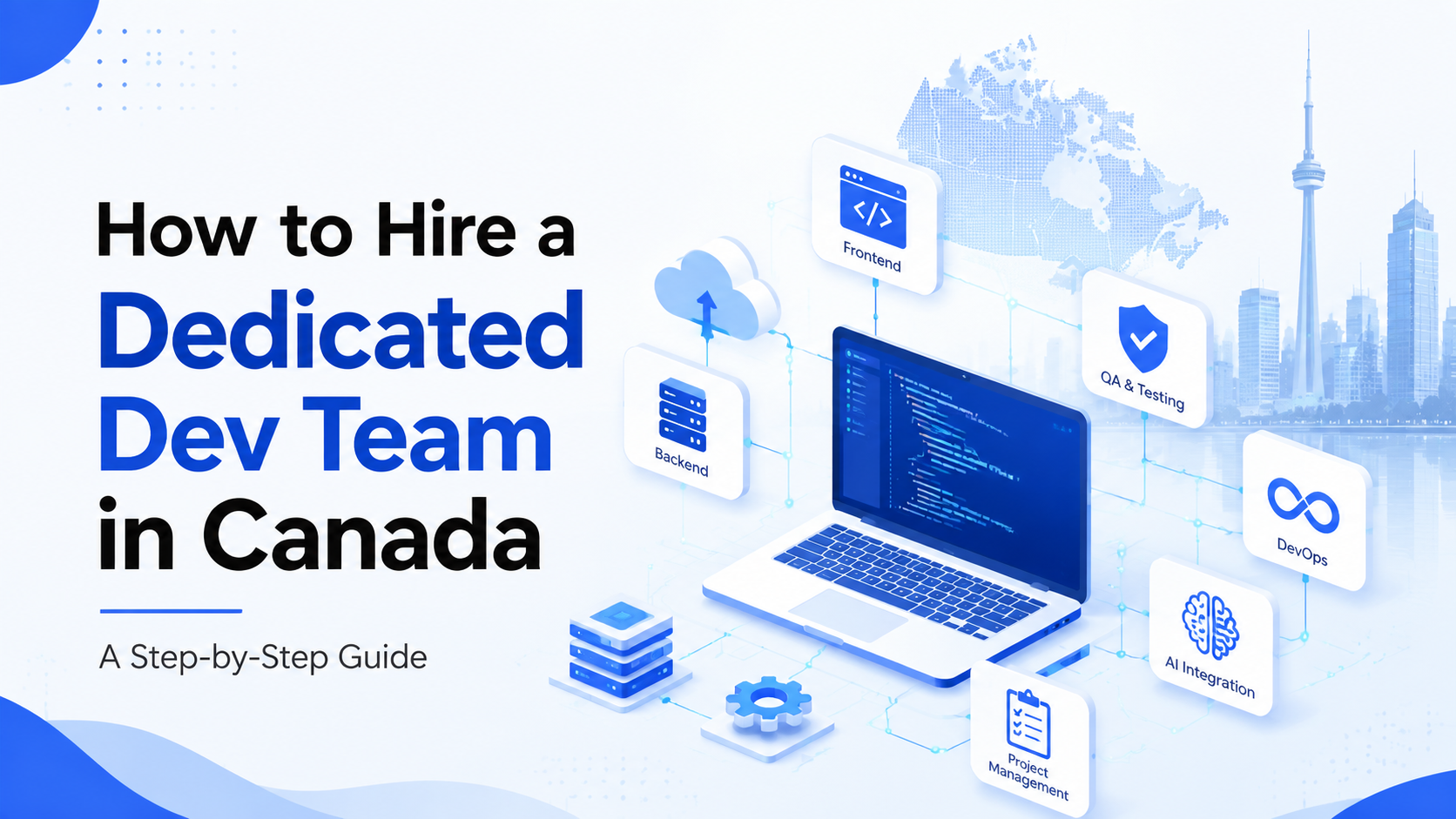
"We need developers" isn't a hiring plan. It's a wish. Most products, whether you're at MVP stage or scaling past it, need a mix of roles working together:

- Frontend and backend developers to actually build the product
- A product designer, especially early on, when you're still figuring out the user journey
- QA, because catching a bug after launch costs far more than catching it in a sprint
- A project manager who manages deadlines and risk, not just relays Slack messages
- DevOps, once you're past MVP and need things to stay up under real traffic
- AI specialists, if your product involves any kind of automation, recommendation, or intelligent workflow
A good partner will map a team structure around these roles before you even ask. If a company's answer to "what's included" is just "developers," that's worth noticing.
Step 3: Get real about your budget
Dedicated teams in Canada typically fall into a few price bands, and where a quote lands tells you a lot:

- $10,000 to $15,000 per month: usually a lean setup, good for early pilots and fast launches. Expect one frontend developer, one backend developer, and a part-time project manager.
- $20,000 to $35,000 per month: a fuller team built for ongoing product work, often including a dedicated designer, QA, and AI integration support.
- $50,000+ per month: built for scale, multiple developers across mobile, backend, and DevOps, with a dedicated technical project manager running the whole operation.
Anything noticeably below these ranges usually means you're hiring a single freelancer being marketed as a "team," or work is being outsourced further to subcontractors you'll never meet.
This is where it's worth looking at how a team structures its pricing. TechCare, for example, is built to stay affordable for startups, with plans that start lean and scale up as your product grows. That means a funded startup can start small and add roles as needed, without paying for a full scaling team before it's ready for one. The plans are built around full teams rather than single hires, which is usually where the real value shows up.
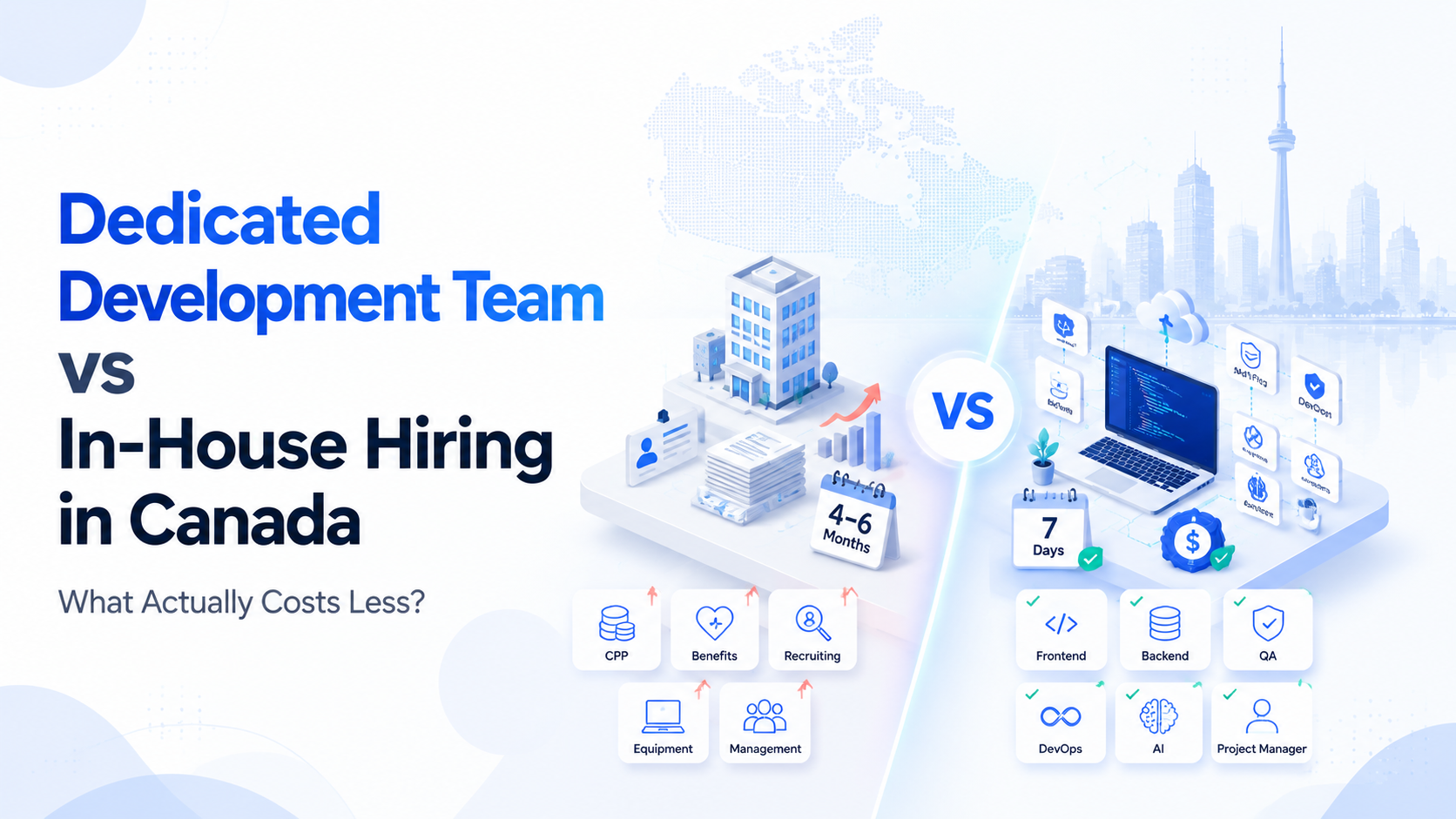
Don't forget the hidden cost comparison either. An in-house hire in Canada comes with payroll tax, CPP, EI, benefits, and recruiting time on top of salary. A well-structured dedicated team often works out to be significantly cheaper once you add all of that up, while giving you a full team instead of a single hire.
Step 4: Ask what happens after launch
This is the question most founders forget to ask, and it's the one that matters most.
Plenty of agencies are great at kickoff. The discovery call is smooth, the deck looks sharp, the first sprint moves fast. Then three or four months in, your main developer rolls onto a new client, someone new gets assigned to you, and you're back to square one explaining your own product to a stranger.
Ask this directly in every conversation: who is on this team in six months? Will it be the same people who started the project?
That single question filters out most agencies fast. It's also where you start to see the difference between a vendor and an actual long-term partner. Companies like TechCare build their entire model around this exact problem, keeping one team assigned to your product for the long haul instead of treating delivery as a one-time handoff. When a team has been with your product for a year, they catch things a brand new contractor never would, because they actually understand why decisions were made the way they were.
Step 5: Check how they handle AI, not just app development
By now, "we build apps" isn't enough on its own to stand out.
Ask how the team approaches AI specifically. Not as a buzzword on a slide, but as something they've actually shipped. Do they build automation into internal workflows? Have they integrated predictive features into a product? Can they point to a real example, not a hypothetical?
A team that treats AI as a bolt-on, something they'll "look into later," is already behind. A team that builds it into the product architecture from day one, whether that's a smarter recommendation engine or an internal tool that saves your team hours every week, is the one you want building yours.
Step 6: Look past the portfolio, ask for outcomes
Screenshots are easy. Anyone can show you a polished UI and call it proof of work.
Ask for numbers instead:
- How much funding has a client raised after working with this team?
- What measurable cost savings came out of the engagement?
- What's the longest client relationship this team has maintained, and why did it last?
A team that can point to specific, named outcomes, not vague claims, has actually shipped products that performed in the real world. Vague answers here are a signal to dig further before signing anything.
Step 7: Understand ownership, IP, and grant eligibility before you sign
This step gets skipped constantly, and it shouldn't be.
Make sure the contract is explicit about who owns the code, the designs, and any IP created during the engagement. It should be you, full stop. If a contract is vague here, get it clarified in writing before work starts.

If you're a Canadian startup, also ask whether the engagement qualifies for SR&ED or IRAP funding. These are federal programs designed to offset R&D costs, and working with a Canada-based team often makes you eligible in ways that hiring an offshore team does not. It's worth asking your accountant about this specifically, since it can meaningfully change your real cost of development.
Step 8: Start with a trial, not a year-long contract
You shouldn't have to commit blind to find out if a team is actually a fit.
Look for partners offering a short, low-risk trial period. 30 days is common and reasonable. You should be able to walk away within that window if things aren't working, without penalty and without a drawn-out exit process.
How a company structures this trial tells you a lot. A team confident in its own delivery will offer this without hesitation. A team that insists on locking you into a long contract before you've seen a single sprint is asking you to take a risk they're not willing to take themselves.
Step 9: Pick the team you'd want in-house, even though they're not
At the end of the day, the best dedicated dev team feels less like a vendor and more like an extension of your own company.
They show up to standups. They flag risks before you have to ask. They care whether the product actually works for your users, not just whether the invoice clears on time.
That's really the whole test. Not how polished the pitch deck looks, but whether you can picture working with these specific people two years from now, still building, still improving, still showing up.